How to Learn to Sing on Your Own by Building a Daily Practice Habit
 By Kirill Zolygin
A lot of people ask the same question in different ways: can I learn how to sing by myself? The honest answer is yes, but not by randomly singing songs once in a while and hoping technique appears on its own.
Most singers who want to improve do not actually need more inspiration. They need structure. They need a way to warm up, repeat the right exercises, hear good examples, and stay consistent long enough to notice real change. That is where a good learning how to sing app can help.
If you have ever wondered how to learn to sing on your own, the answer is usually less dramatic than people expect. You do not start with high notes, big belts, or difficult songs. You start with a repeatable routine. You train the voice regularly, build coordination step by step, and give yourself a system that is easy to return to every day.
That is the idea behind the Time to Sing app.
A practical way to teach yourself how to sing
People often search for things like how to learn to sing by yourself, teach yourself how to sing, or how to train yourself to sing. What they usually want is not theory. They want a clear path they can actually follow at home, in the car, before rehearsal, or before a karaoke night.
The app is built for exactly that kind of self-study.
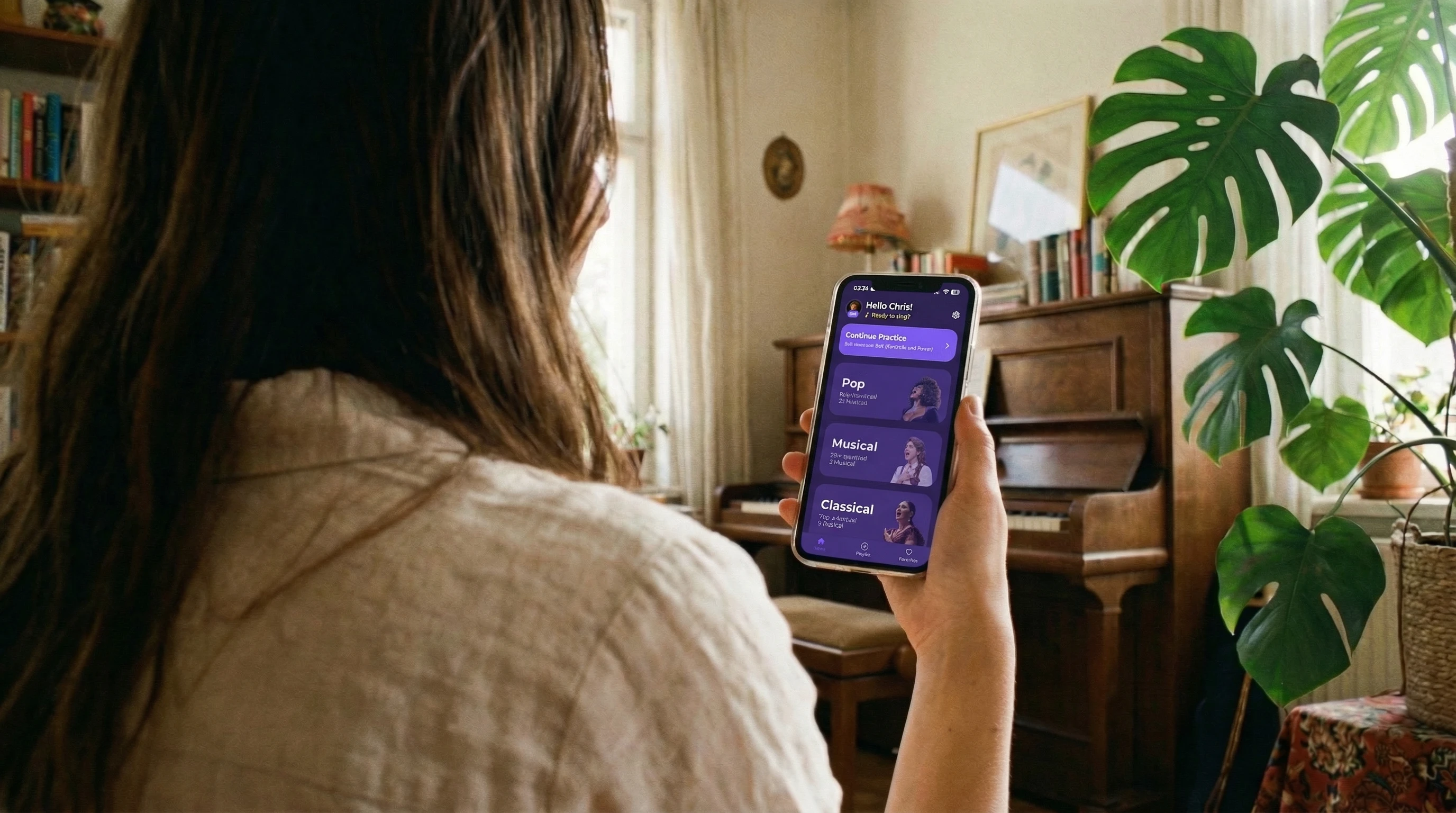
You choose a category, such as Pop, Musical, or Classical, and start with the first exercise. The exercises are ordered from easier coordination work toward more demanding sounds. That means you do not just jump into intense material immediately.
You begin with breathing, then speech-based singing, then chest voice, mixed voice, head voice, and later more exaggerated sounds like belt.
That progression matters. It gives beginners a sensible entry point, and it gives intermediate hobby singers a reliable way to warm up without overthinking what to do first.
What actually happens inside the app
If you are asking how to learn how to sing on your own without a teacher standing next to you, the biggest challenge is usually this: you do not know what the exercise is supposed to feel or sound like.
That is why each exercise is taught in layers.
First, you watch the video. You hear a short snippet of the sound, then a detailed explanation with examples. You can stop, listen again, and try it yourself. In many exercises, the teacher leaves space for you to respond. In others, the full sound is demonstrated so you can hear how it develops across the range.
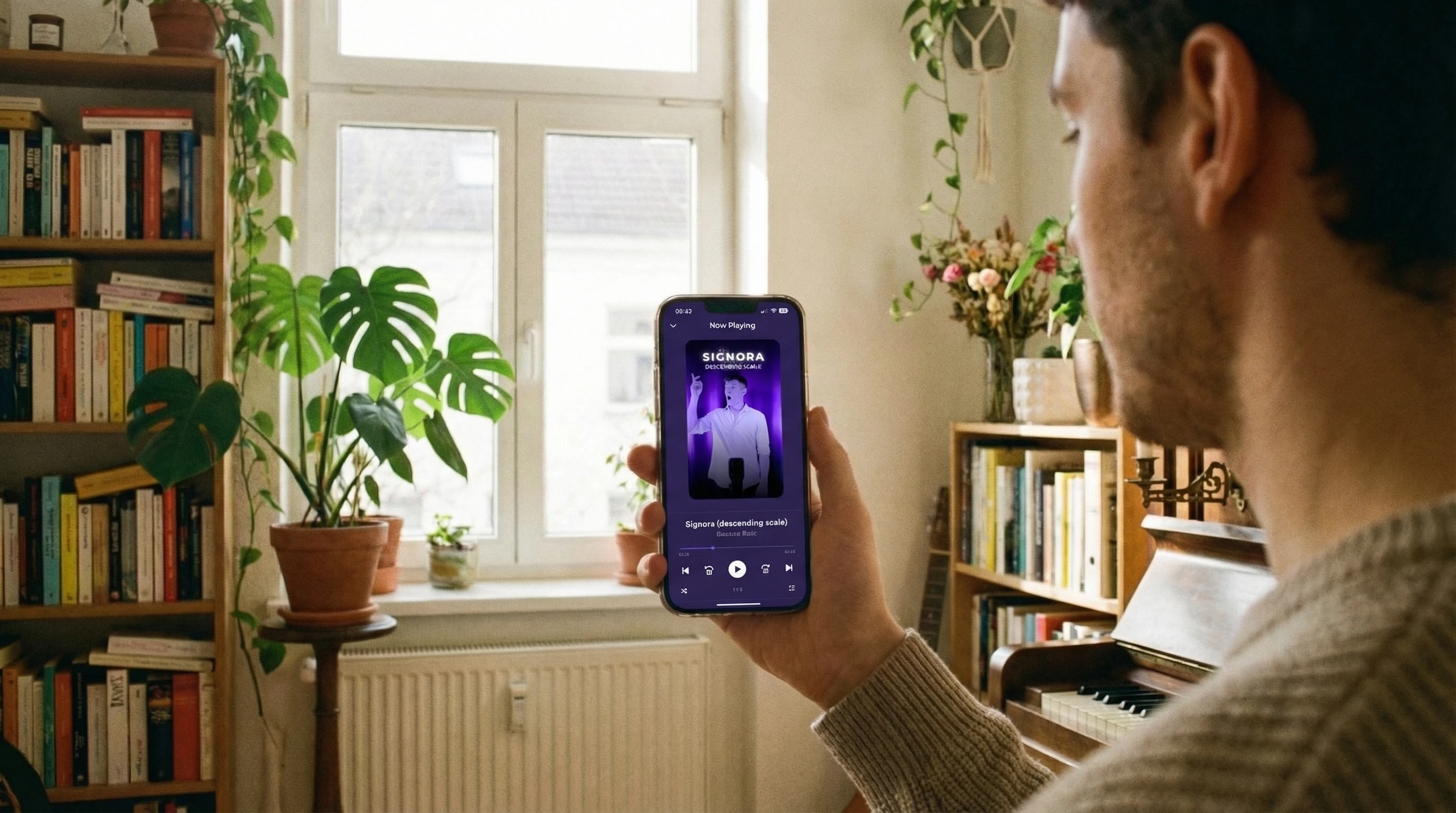
Then you swipe up to access the playback section. There, you can listen to the exercise audio and practice it directly in the same interface. The audio typically begins with a guided vocal example, then continues with the playback so you can sing on your own.
If you find an exercise useful, you can save it offline to your phone. That way, both the video and audio stay available even when your connection is weak. You can also add the exercise to your favorites and include the audio in your playlist.
This is where the app becomes more than a library. It becomes a routine.
Learning alone works better when the habit is built in
A lot of advice about how to learn singing by yourself ignores one simple fact: even great exercises are useless if you do not come back to them.
That is why habit-building matters so much.
Inside the app, you can create your own playlists from the exercises that help you most. You can reorder them, remove tracks, and build a sequence that fits your voice and your goals. There are also curated playlists designed for specific situations and needs, such as singing in the shower, singing while driving, getting started as a beginner, or working toward higher notes.

Once your routine is ready, you can set reminders and receive real push notifications at the time you choose. The reminder can even use your own wording, so it feels less like a generic app alert and more like a message from your future self telling you to get up and rehearse.
That may sound small, but it is one of the most practical answers to how to learn to sing alone. Consistency beats intensity. Five focused sessions a week will usually do more than one overexcited practice marathon followed by silence.
Good for beginners, hobby singers, and audition prep
The app is especially useful for singers who already sing regularly but need more structure. That includes beginners, intermediates, hobby singers warming up for karaoke, and performers preparing for auditions, especially in musical theater.
If you have ever asked how to correctly sing, the answer is not one magic tip. It is repeated exposure to solid exercises, clear demonstrations, and enough practice time for the coordination to settle in.
The technique in the app is practical and experience-based. It is not sold as scientific magic, and it is not fake AI coaching. It is built from real daily stage and teaching experience, with exercises designed to help singers rehearse on their own in a way that is direct, usable, and repeatable.
Track your progress instead of guessing
One reason people give up on self-study is that they cannot tell whether they are doing enough.
The app solves that by showing your daily practice minutes, the exercises you use most, your favorites, and your recent activity across daily, weekly, and monthly statistics. That kind of feedback is simple, but it helps turn singing into a visible habit rather than a vague intention.
And that is really the answer to the question how to learn to sing on your own. You do not do it by waiting for motivation. You do it by creating a system you can return to again and again.
For the fuller picture, including how to find your comfortable range and the mistakes to avoid, see the complete guide to teaching yourself to sing.
Time to Sing gives you that system: guided videos, clear audio practice, offline access, custom playlists, curated sessions, reminders, and progress tracking across Pop, Musical, and Classical training.
If you want a practical way to build your voice without depending on a live lesson every single day, download the app and get started.

