Why Your Voice Has Two "Engines" (The Simplest Singing Explanation Ever)
 By Karina Schwarz
Have you ever noticed that a dog can make two very different sounds?
A dog can bark. Woof! Woof!
And a dog can howl. Awooooo!
Everybody knows these sounds. Now here's something interesting: your voice works in a similar way. Not exactly like a dog... fortunately! 😄
Our voice also has two main muscle systems that work together. You don't need to remember their long names. Just remember these: TA and CT. Think of them as two different athletes.
The TA muscle is our bodybuilder. It gives us strength, power, and what we usually call chest voice. It is also the voice we normally speak with.

The CT muscle is our ballet dancer. It stretches the vocal folds, making them longer and thinner. This creates what we usually call head voice, and it allows us to sing higher notes.

So remember:
TA = power.
CT = stretch.
Bodybuilder versus ballet dancer.
Humans Can Do What a Dog Can't
Now here's the fun part. A dog mostly does one or the other. It barks, or it howls. Humans can do something much more interesting: we can combine both systems. That is what makes the human voice so amazing.
People who yodel actually play with this change on purpose. They jump from one coordination to another, creating the famous yodel sound. You can also hear this effect in many pop songs, when singers intentionally flip into a lighter sound because it creates a beautiful musical effect.
Classical Singing: A Smooth Blend
The goal in classical singing is a beautifully balanced voice. Across about two octaves, these two muscle systems work together very smoothly. The balance changes little by little. In the lower notes, the bodybuilder, our TA muscle, does more work. As the notes get higher, the ballet dancer, our CT muscle, takes over more and more.
A great classical singer makes this transition almost impossible to hear. That's why classical singing takes many years of training.
Pop Singing: A Different Balance
This is where many singers get confused. Pop singing does not use exactly the same balance as classical singing, and, as I've written before, classical training was never designed to produce a pop sound in the first place.
When I moved from opera, after 15 years of working in an opera house, to musical theatre and pop singing, it was not easy. I had to learn completely new coordinations.
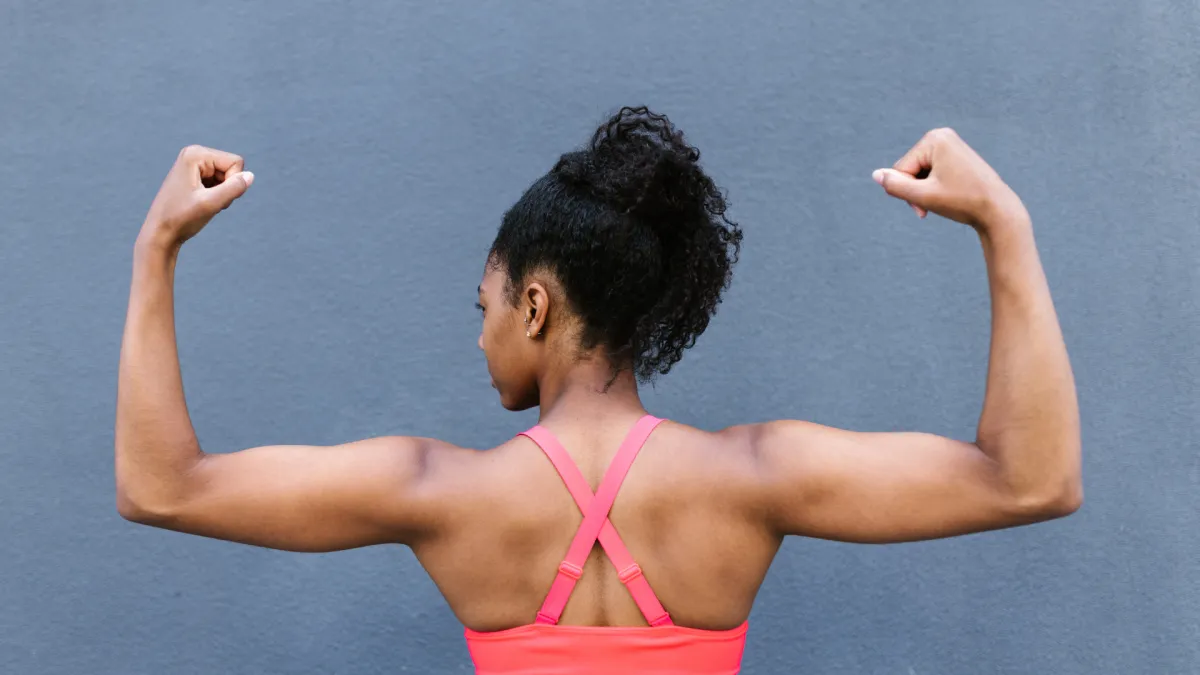
For many women, the challenge is developing more TA activity and bringing more chest voice into the middle and upper part of the voice, but without making it too heavy. Think of a slim, athletic bodybuilder, not a giant one.
For many classically trained men, the challenge is different. They often need to develop more flexibility in their upper range. Their ballet dancer needs to become stronger by involving the CT muscles more.
What Belting Really Means
Now let's talk about belting. Many beginners think belting simply means singing high notes louder. I don't see it that way.
My advice is simple: first, build your ballet dancer. Then add the weights. First, learn to stretch. Then add strength.

Imagine trying to do the splits while carrying a huge barbell. Not a great idea, right? It makes much more sense to learn the splits first. Then you can slowly add weight. I believe singing works in a very similar way.
First CT. Then TA.
First flexibility. Then strength.
If you understand this simple idea, many things about singing suddenly become much easier to understand. And in a future article, we'll look at what really happens in belt and mixed voice.
The Two Ingredients
Before we finish, here's the most important idea: you only have two main ingredients, TA and CT. The secret is not getting more muscles. The secret is learning how to mix them.
A little more TA. A little more CT. Different styles need different proportions. That's why head voice, chest voice, mix, and belt all feel and sound different.
At Time to Sing, we've created separate exercises for each of these coordinations. There are exercises for head voice, chest voice, mix, and belt. We also separate them by style, Pop, Musical, and Classical, because every style uses these two "ingredients" a little differently. If you're putting together a self-practice routine around this, the complete guide to teaching yourself to sing walks through the order that works best.
Our goal is simple: not just to tell you what to do, but to help you actually feel the difference in your own voice.
And once you learn how to balance these two systems, your voice becomes incredibly flexible. You are no longer limited to just barking, or howling. You can choose the sound you want. And that's what makes the human voice such an amazing instrument.

